The Modulated X-ray Source: Imaging, Communication, and Sensing
The Modulated X-ray Source (MXS) is a technology developed for NICER that enabled the
calibration of the mission's time resolution and other temporal capabilities. The MXS opens up the time
domain of X-ray generation and has many other applications including medical imaging, communication,
and material characterization. The MXS is a gateway technology with more applications being
discovered.
MXS: Breakthrough Technology
Conventional X-ray tubes rely on hot filaments with thermal mass which causes a
ramp-up/ramp-down effect when modulating X-ray brightness. In contrast, the MXS uses LED-driven
photoelectric emission to move rapidly from full intensity to zero intensity with essentially no
ramping, enabling fast modulation and new operating modes.
The MXS provides:
Rapid rise and fall times
Compact, portable configuration
Fine control of X-ray output intensity
A common hardware foundation for multiple applications.
MXS response compared with conventional X-ray tube behavior.
Portable Computed Tomography (CT)
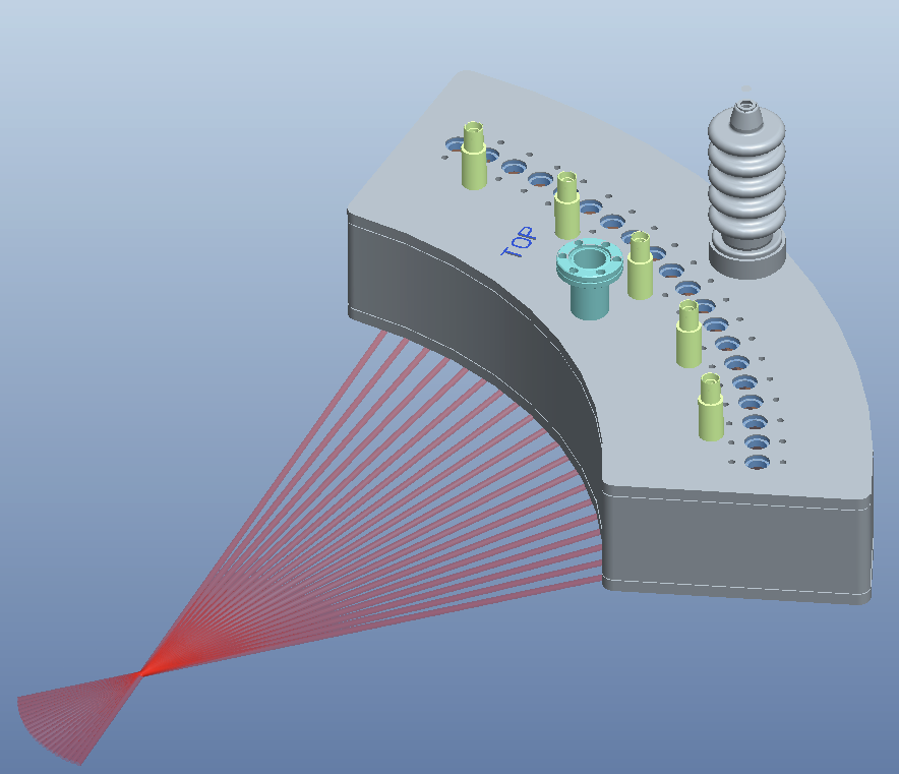
The MXS provides no-moving-parts CT scanning using MXS sources with imaging detectors.
Traditional CT scanning machines use a massive X-ray source moving rapidly on a circular track, requiring them to be
anchored to a strong foundation.
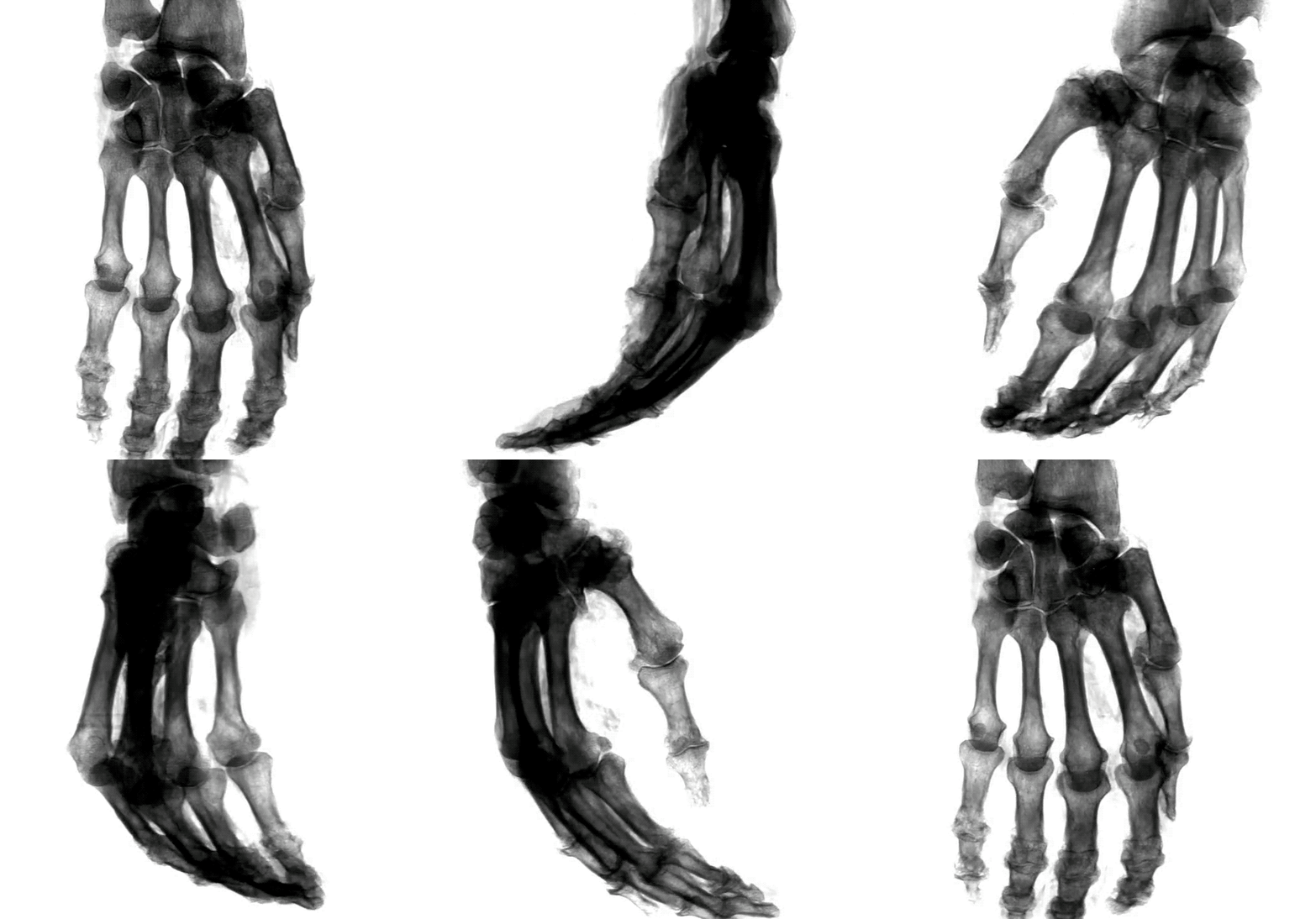
Partial prototypes of a new CT scanning system with no moving components has been developed and demonstrated in
collaboration with Massachusetts General Hospital.
These systems are multi-functional and discipline-agnostic, meaning they can be applied in a
number of ways:
Crew health monitoring, such as studying bone density and growth changes
Field emergency medicine, on Earth as well as in space
3D inspection of printed parts, to study voids, details
3D X-ray imaging of rocks and other samples
Precise location targeting and X-ray dose control.
By making the X-ray source electronically modulated rather than mechanically swept, the dream
of compact static CT scanning is approaching reality.
Left: Concept drawing of static CT scan system geometry.
Right: 3-D imagery of bone scan performed by prototype stationary CT scan system.
More information about stationary CT capabilities:
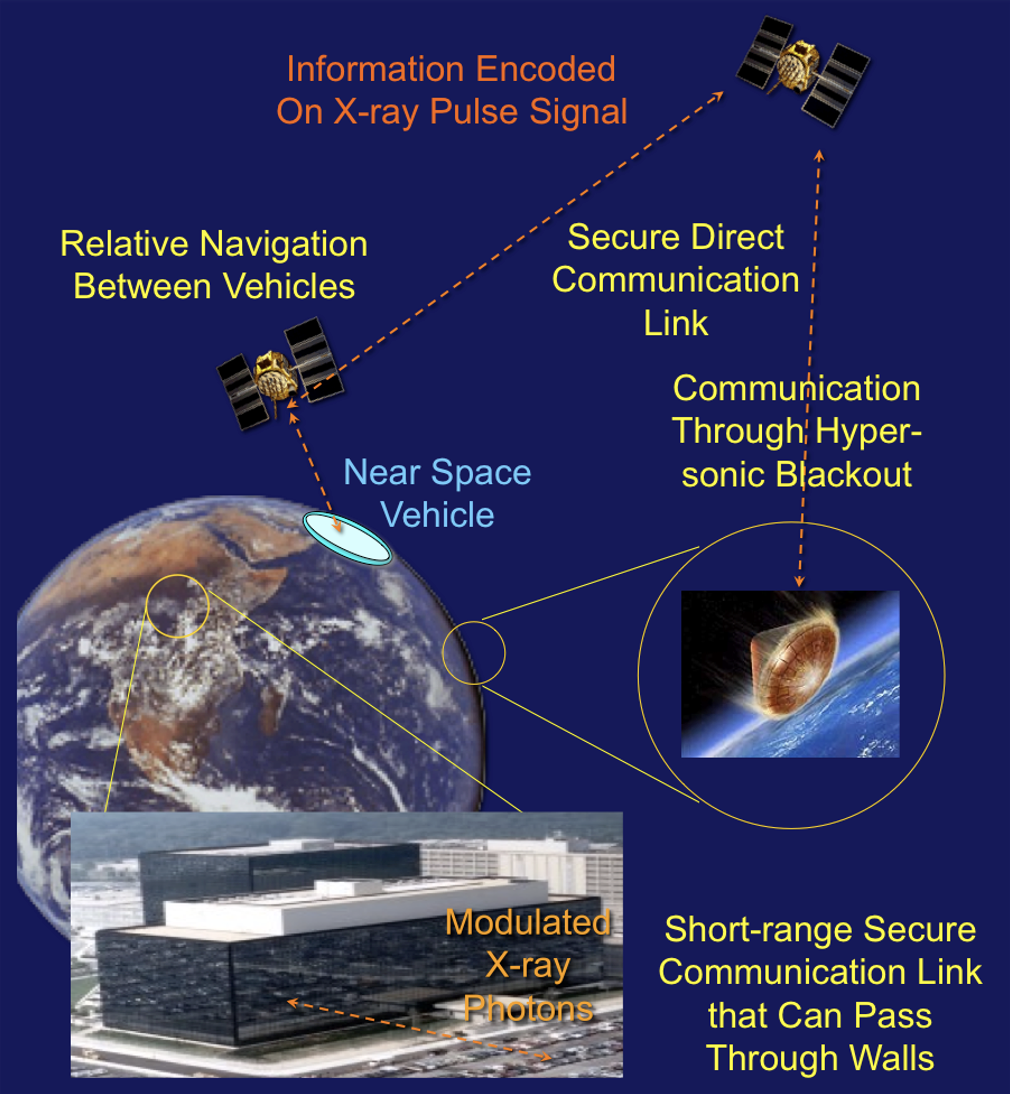
At lower energies, X-rays offer very tight beams for secure, high-rate communication. In
addition, high-energy X-ray communication can provide short-range penetrating links, as well as the
capability to communicate during hypersonic blackout periods.
XCOM allows secure communications in situations where normal
methods are unable or not secure.
Ion-mobility spectroscopy
MXS provides high-sensitivity ion-mobility spectroscopy to "sniff" molecules in air, extending the technology portfolio beyond spaceflight navigation and X-ray imaging.
More information about ion-mobility spectroscopy with modulated X-rays: