Pulsar-based navigation & solar-system timekeepingNICER's SEXTANT software payload enhancement demonstrated that X-ray pulsars can act as GPS-like beacons for spacecraft and as a basis for precision timekeeping far beyond Earth's orbit. Why it matters
SEXTANT demonstrationThe ISS-hosted NICER X-ray telescope carried software for photon-based signal acquisition and state estimation. The performance demostration for this software surpassed its objectives for autonomous real-time orbit determination in the dynamic ISS environment using observations of four pulsars. Future concepts include short-burn trajectory verification (e.g., ISS reboosts), relative navigation, and communication links. 

Right: SEXTANT on-board performance during on-orbit demonstration determined ISS position to within 10 km Practical-sensor simulations show that X-ray navigation results in significantly improved on-board positioning with no need for frequent deep-space network (DSN) contact. A simulation utilizing a single-sensor detector, 1/56th of the full NICER collecting area, for the cruise phase of a future Cassini-like mission shows significant improvements over DSN-focused positioning. 
Galactic Time - A Pulsar Time StandardLong-term pulsar stability rivals laboratory atomic clocks. And pulsars are a proven time reference, enabling locally generated time that is synchronous with other sites viewing the same pulsars. In addition, X-rays are not affected by interstellar signal delays, thus minimizing instrument resource needs relative to radio-band measurement systems. 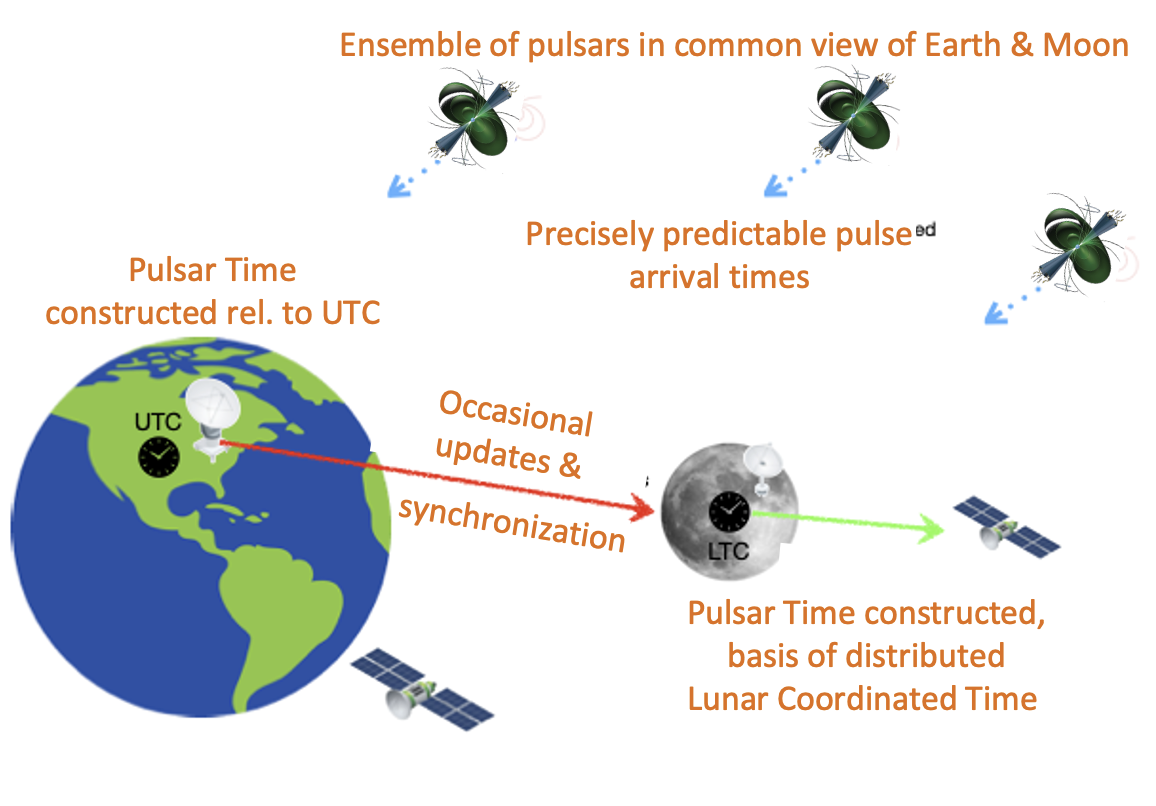
This makes pulsar timing an excellent candidate for a solar-system-wide time standard, responsive to lunar timing and interoperability needs. Long-baseline NICER timing of six selected X-ray millisecond pulsars has pushed the boundaries of typical atomic clocks, with no evidence of low-frequency noise after 8 years of timing data. 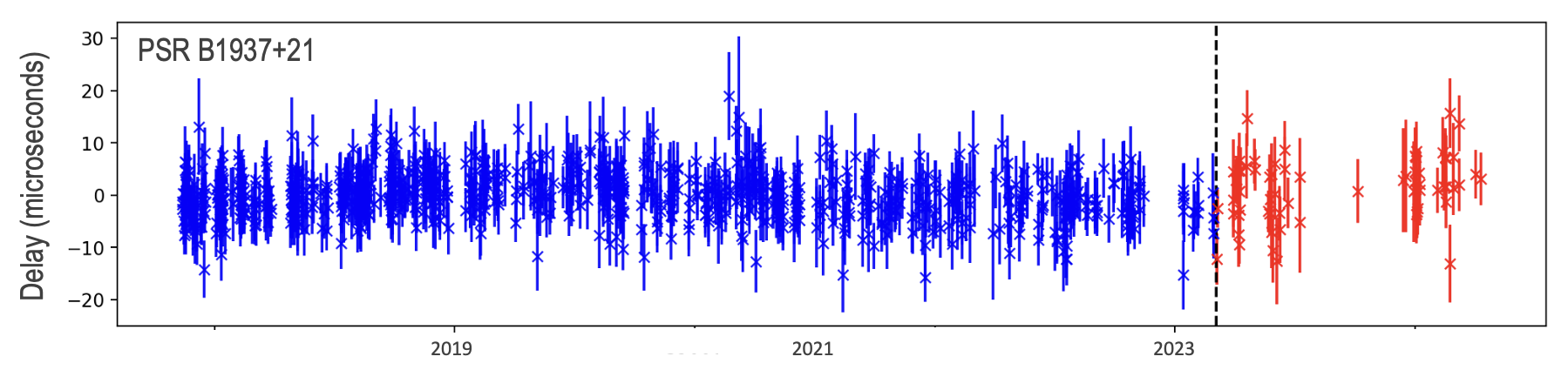
The use of pulsar timing as a standard is responsive to HR 2313, "Celestial Time Standardization Act," to establish time at the Moon, and beyond, that is traceable to UTC and resilient to loss of Earth contact. |



- HEASARC Director: Vacant
- NASA Official: Ryan Smallcomb
- Web Curator: J.D. Myers
- Last Modified: 6-May-2026