
Come analyze HEASARC, IRSA, and MAST data in the cloud! The Fornax Initiative is now welcoming all interested beta users.


INTEGRAL

INTEGRAL Guest Observer Facility

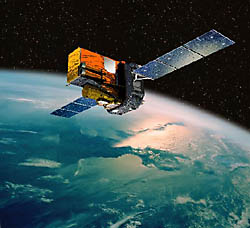
INTEGRAL The International Gamma-Ray Astrophysics Laboratory (INTEGRAL) of the European Space Agency was successfully launched on October 17, 2002. It was lifted off from Baikonur in Kazakhstan on a Russian Proton launcher and is now on a 72-hour elliptical orbit, ranging from 9,000 km up to 155,000 km from Earth. INTEGRAL is the successor of the ESA gamma-ray observatory Cos-B and the NASA gamma-ray Observatory CGRO. It is producing a complete map of the sky in the soft gamma-ray waveband and it is capable of performing high spectral and spatial observations in gamma rays. The observatory is also equipped with X-ray and optical detectors to provide simultaneous observations in these wavebands.

Mission Characteristics

* Lifetime : October 2002 - (nominal 2 year mission, extended through June 2023)
* Energy Range : 3 keV - 10 MeV and Optical V-band
* Special Features : High spectral and spatial resolution.
Simultaneous Gamma-ray, X-ray and Optical observations.
* Payload :
  • 2 Gamma-ray instruments
    • Spectrometer (SPI; 20 keV - 8 MeV)
      Coded aperature mask. FOV 16°, detector area. 500 cm2 (Germanium array) spectral resolution (E/dE) 500 @ 1 MeV, spatial resolution 2°.
    • Imager (IBIS; 15 keV - 10 MeV)
      Coded aperature mask. FOV 9° X 9°, detector area. 2600 cm2 (CdTe array) & 3100 cm2 (CsI array), spatial resolution 12´.

  • Joint European X-ray Monitor (JEM-X; 3- 35 keV)
    Coded aperature mask with 2 high pressure microstrip gas chambers.
    FOV 4.8°, detector area. each 500 cm2, spatial resolution 3´.
  • Optical Monitoring Camera (OMC; 500-850 nm). 50mm lens with CCD.
    FOV 5° X 5°.

* INTEGRAL artist’s view courtesy of ESA.

* Archive: HEASARC hosts the INTEGRAL data and catalogs.

[ESA INTEGRAL Home page] [INTEGRAL Science Data Center]